Transfected Stable Cell Lines
Reliable | High-Performance | Wide Rage
Precision reporter, kinase, immune receptor, biosimilar, Cas9, and knockout stable cell lines for diverse applications.


Cat. No. : CSC-RT0708
Target Gene : AHR Host Cell : HeLa
Size : >1x10⁶ cells/vial Validation : Sequencing
| Cat. No. | CSC-RT0708 |
| Description | A stable cell line with a homozygous knockout of human AHR using CRISPR/Cas9. |
| Target Gene | AHR |
| Host Cell | HeLa |
| Host Cell Species | Homo sapiens (Human) |
| Size | >1x10⁶ cells/vial |
| Validation | Sequencing |
| Storage | Liquid nitrogen |
| Shipping | Dry ice package |
| Revival | Rapidly thaw cells in a 37°C water bath. Transfer contents into a tube containing pre-warmed media. Centrifuge cells and seed into a 25 cm2 flask containing pre-warmed media. |
| Media Type | Cells were cultured in DMEM supplemented with 10% fetal bovine serum. |
| Growth Properties | Cells are cultured as a monolayer at 37°C in a humidified atmosphere with 5% CO2. Split at 80-90% confluence, approximately 1:4-1:6. |
| Freeze Medium | Complete medium supplemented with 10% (v/v) DMSO |
| Mycoplasma | Negative |
| Format | One frozen vial containing millions of cells |
| Storage | Liquid nitrogen |
| Safety Considerations |
The following safety precautions should be observed. 1. Use pipette aids to prevent ingestion and keep aerosols down to a minimum. 2. No eating, drinking or smoking while handling the stable line. 3. Wash hands after handling the stable line and before leaving the lab. 4. Decontaminate work surface with disinfectant or 70% ethanol before and after working with stable cells. 5. All waste should be considered hazardous. 6. Dispose of all liquid waste after each experiment and treat with bleach. |
| Ship | Dry ice |
| Gene Name | AHR |
| GeneID | 196 |
The aryl hydrocarbon receptor (AHR) is a ligand-activated transcription factor that plays a crucial role in various biological processes, including responses to environmental toxins, regulation of immune function, and development. Structurally, the AHR belongs to the basic helix-loop-helix Per-ARNT-Sim (bHLH-PAS) family of transcription factors. Upon ligand binding, the AHR translocates from the cytoplasm to the nucleus, where it dimerizes with the AHR nuclear transporter (ARNT). This AHR-ARNT complex then binds to specific DNA sequences called xenobiotic response elements (XREs) or dioxin response elements (DREs), leading to transcriptional activation or repression of various target genes.
The AHR also influences the differentiation and function of various immune cells, including T helper 17 (Th17) cells and regulatory T cells (Tregs), which are essential for maintaining immune homeostasis and preventing autoimmunity. In addition, the AHR is involved in regulating inflammatory responses and plays a role in the gut microbiota, suggesting that it may contribute to intestinal health and disease. The therapeutic potential of targeting the AHR has attracted interest in recent years. Manipulating AHR signaling could provide new avenues for treating a variety of diseases, including cancer, autoimmune diseases, and cardiovascular disease.
Sphingolipid biosynthesis produces lipids required for membranes and signaling, which is essential for many developmental and physiological processes. In some cases, large amounts of specific sphingolipids must be synthesized to achieve specialized physiological functions, such as during axon myelination. How sphingolipid synthesis is regulated to meet these physiological needs is unclear. Here, researchers screened and identified several genes required for Gb3 synthesis in the sphingolipid biosynthesis pathway, and also identified the aryl hydrocarbon receptor (AHR), a ligand-activated transcription factor widely involved in development and physiology, as required for Gb3 biosynthesis. Cell surface Gb3 levels were significantly reduced in AHR knockout HeLa cells, and both AHR knockout HeLa cells and tissues from Ahr knockout mice displayed decreased sphingolipid content as well as significantly reduced expression of several key genes in the sphingolipid biosynthetic pathway. Sciatic nerves from Ahr knockout mice showed reduced ceramide content and reduced myelin thickness. These results suggest that AHR upregulates sphingolipid levels and is important for complete axonal myelination, which requires elevated membrane sphingolipid levels.
To directly determine whether AHR regulates SL levels, an AHR knockout (AHR KO) HeLa cell line was generated by Cas9-mediated disruption of the AHR gene (Figure 1A). Cell surface expression of Gb3 was significantly reduced in AHR KO HeLa cells compared with control cells (Figure 1B). Ceramide levels of some individual species and total ceramide were significantly reduced in AHR KO cells compared with control HeLa cells (Figure 1C). In the absence of AHR, mRNA expression of SL biosynthesis pathway genes SPTSSA, KDSR, UGCG, B4GALT5, and A4GALT was significantly reduced, while CERS2 expression was enhanced (Figure 1D). These results indicate that AHR is required for the normal expression of several key genes in the Gb3 biosynthesis pathway and that SL levels (ceramide and Gb3) are both reduced in the absence of AHR.
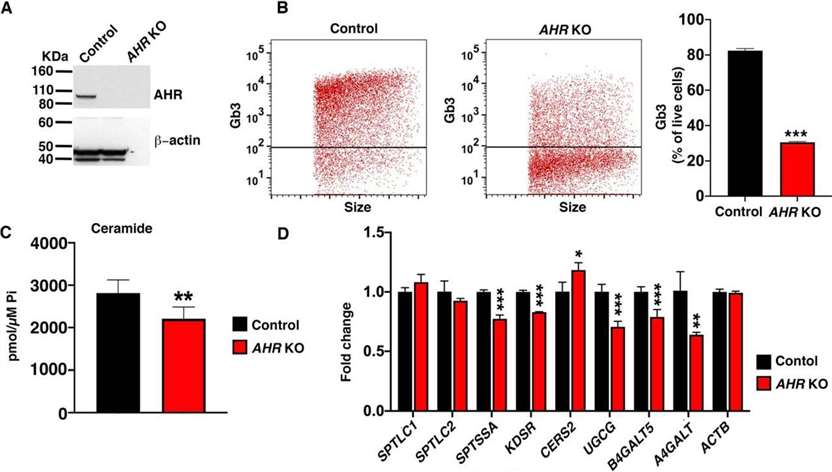 Figure 1. AHR is a positive regulator of SL levels in HeLa cells. (Majumder, Saurav, et al. 2020)
Cancer Research: Human AHR (Aryl Hydrocarbon Receptor) Knockout Cell Lines in HeLa cells are extensively used to study the role of AHR in cancer progression and metastasis. By knocking out this gene, researchers can understand how AHR influences tumor growth, cell proliferation, and survival mechanisms in cervical cancer cells.
Toxicology Studies: These knockout cell lines are pivotal in toxicology studies to assess the cellular response to environmental toxins and pollutants in the absence of the AHR pathway. This helps in evaluating the impact of various chemicals and their mechanisms of action at the cellular level.
Gene Regulation Research: Using AHR Knockout HeLa cell lines allows scientists to investigate the gene networks and pathways AHR influences. This can shed light on AHR’s role in transcriptional regulation and signal transduction.
Pharmacology and Drug Development: These cell lines serve as a model to screen and develop new drugs targeting the AHR pathway. Researchers can identify potential pharmaceuticals that may inhibit or activate AHR, paving the way for novel therapeutic strategies in diseases where AHR is implicated.
Immunological Studies: AHR has been shown to affect immune responses. Using AHR Knockout HeLa cells, immunologists can dissect the receptor’s role in modulating immune functions and inflammatory responses, contributing to a better understanding of immune-related diseases.
A: DMEM supplemented with 10% fetal bovine serum. <br> It is not required to add the selection antibiotics when culturing the KO cells.
A: The knockout cell product is validated by PCR amplification and Sanger Sequencing to confirm the mutation at the genomic level. Please find the detailed mutation info in the datasheet.
A: Single clonal cell.
A: No. This knockout cell product is generated using the CRISPR/Cas9 system to induce small insertions or deletions (indels) resulting in frameshift mutations. Although these frameshift mutations typically disrupt the coding gene, there is a possibility that the non-functional transcript may still be transcribed. Consequently, this could potentially yield misleading results when analyzed by RT-qPCR.
A: The cell line should be stored in liquid nitrogen for long-term preservation.
A: For most cases, we often keep at least 2 clones with different frameshift mutations. Please feel free to contact us to check if there are additional available clones.
If your question is not addressed through these resources, you can fill out the online form below and we will answer your question as soon as possible.
This knockout cell line has proved versatile in various experimental setups, ranging from drug screening to basic research on AHR signaling pathways.
The Human AHR Knockout Cell Line-HeLa has provided us with distinct phenotypic differences that are easy to quantify, making our data robust and publication-ready.
Write a review of your use of Biogene products and services in your research. Your review can help your fellow researchers make informed purchasing decisions.
Copyright © 2026 Creative Biogene. All rights reserved.