Pages
Products
Products
CBpromise

Our promise to you:
Guaranteed product quality, expert customer support.

Promise 24Hour 24x7 CUSTOMER SERVICE
Promise Telphone CONTACT US TO ORDER

RT PCR Kits

RT PCR Kits

RT-PCR (Reverse transcription-PCR) is a PCR process that uses reverse transcriptase to make DNA (cDNA) from an RNA template. The cDNA then undergoes "normal" PCR processes, under the control of DNA polymerases, resulting in the synthesis of millions of double-stranded DNA molecules representing the sequence of the original RNA.

RT-PCR is used to detect and quantify messenger RNA (mRNA). It is also used to make cDNA libraries, which can aid the study of gene expression and sequences.

Creative Biogene provides a range of RT-PCR kits for robust, convenient reverse transcription of full-length cDNA from abundant and rare mRNAs.
RT PCR Kit List

Case Study

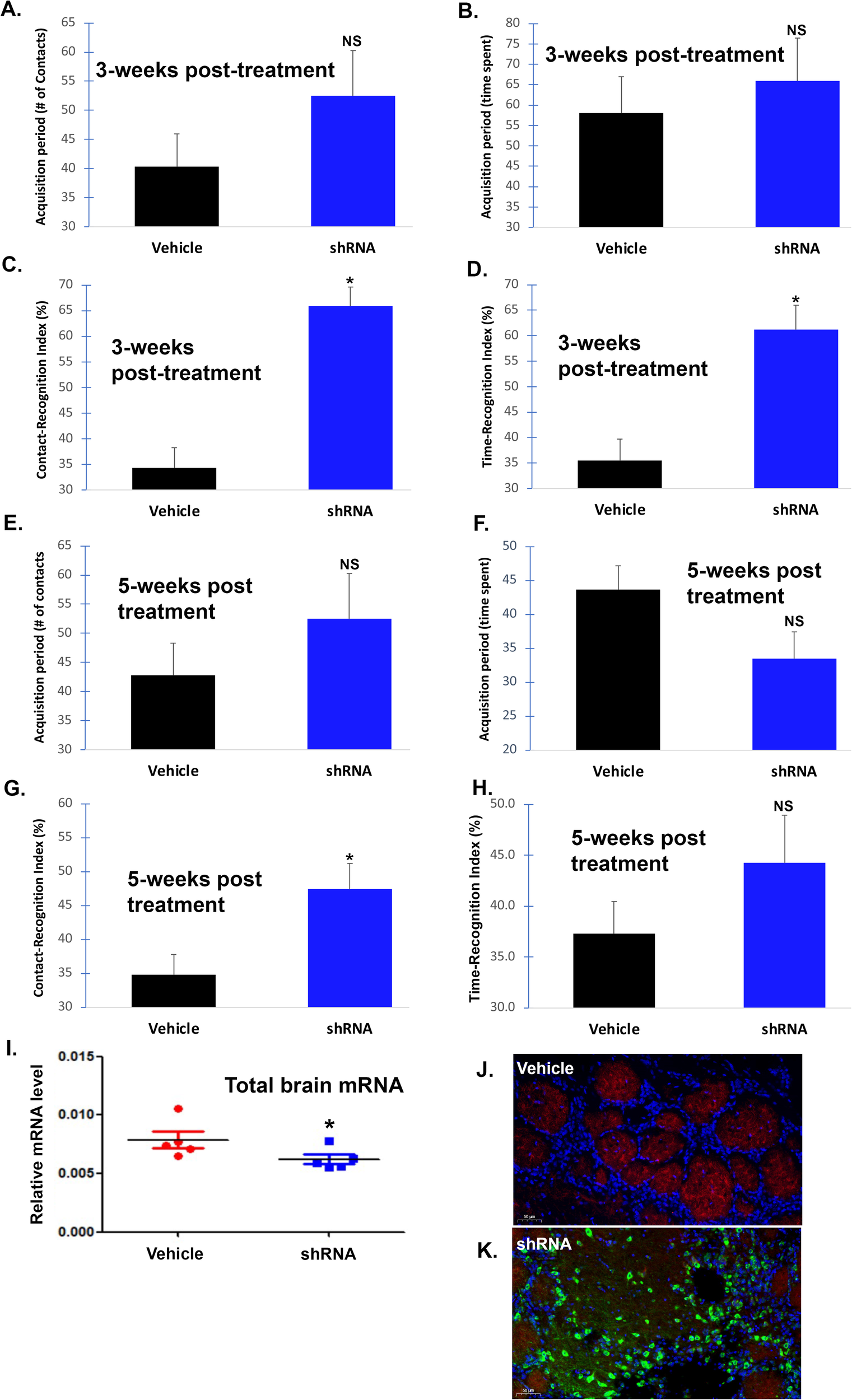
Intranasal adeno-associated virus delivery of AAV9-MeCP2-GFP-mouse HTR2A-shRNA improves memory in rats. Intranasal adeno-associated virus delivery of AAV9-MeCP2-GFP-mouse HTR2A-shRNA improves memory in rats.
Intranasal delivery of shRNA to knockdown the 5HT-2A receptor enhances memory and alleviates anxiety

Paper 2024
Translational Psychiatry | DOI
Background
This study designed short-hairpin RNA (shRNA) targeting the human HTR2A gene to knock down the 5HT-2A receptor. In iPSC-derived neurons, shRNA reduced 5HT-2A mRNA/protein and spontaneous electrical activity. Intranasal AAV9-shRNA delivery bypassed the blood-brain barrier in mice and rats, decreasing anxiety-like behavior and improving memory (104% in mice, 92% in rats). The findings support a non-invasive shRNA platform targeting HTR2A for chronic anxiety and age-related cognitive decline. Thus, HTR2A-targeting shRNA has therapeutic potential for anxiety and cognitive disorders.
Key Findings
The study showed that shRNA targeting HTR2A effectively knocked down the 5HT-2A receptor. In human iPSC-differentiated glutamatergic neurons, shRNA reduced HTR2A mRNA by 34% and 5HT-2A immunofluorescence by 27%, and decreased spontaneous electrical activity in multi-electrode array measures. In vivo, intranasal AAV9 delivery of shRNA crossed the blood-brain barrier and reduced 5HT-2A receptor expression in mouse brain and olfactory bulb. It decreased anxiety-like behavior in mice at 5 weeks, with increased time in light box (34%) and entries (22%). It also improved memory: aged mice treated with AAV9-CRISPR/Cas9 showed 104% increase in spontaneous alternations, and rats treated with AAV9-shRNA showed 92% increase in contact-recognition index at 3 weeks and 36% at 5 weeks. The results suggest that targeting HTR2A may alleviate anxiety and age-related cognitive decline.
Contribution
Creative Biogene performed RNA extraction and quantitative real-time PCR (qPCR) analyses in a blinded fashion for human iPSC-derived neurons and mouse/rat brain or olfactory tissue, including total brain and olfactory bulb samples. Their qPCR data supported validation of shRNA-mediated HTR2A mRNA knockdown after AAV9-shRNA treatment.
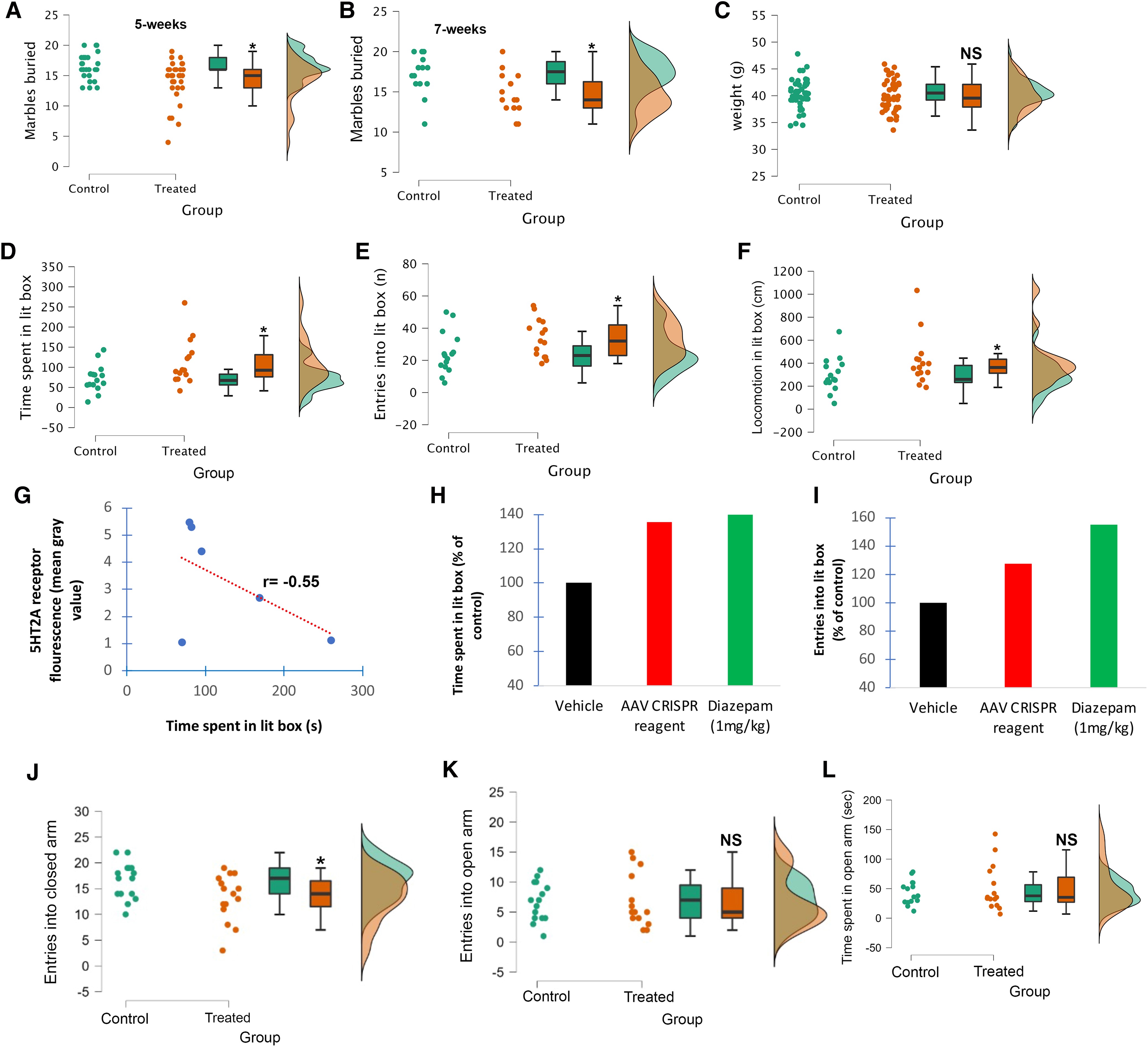
Intranasal AAV delivery of copackaged Cas9 DNA and a HTR2A-targeting gRNA decreases anxiety. Intranasal AAV delivery of copackaged Cas9 DNA and a HTR2A-targeting gRNA decreases anxiety.

Genetic modulation of the HTR2A gene reduces anxiety-related behavior in mice

Paper 2023
PNAS Nexus | DOI
Background
The study demonstrates a noninvasive intranasal AAV9 CRISPR/Cas9 platform for editing the HTR2A gene in the mouse CNS. Dual AAV9 vectors delivering Cas9 and an HTR2A-targeting gRNA/ssODN reduced 5HT-2A receptor mRNA and protein, decreased spontaneous neuronal network activity in vitro, and lowered anxiety-like behavior in mice. The work shows blood–brain barrier bypass, durable modulation of a complex behavioral trait, and proof of concept for gene-editing therapies targeting treatment-resistant anxiety and depression.
Key Findings
Intranasal AAV9-CRISPR/Cas9 delivery achieved widespread CNS expression of gRNA/GFP, including olfactory bulb, cortex, cerebellum, interpeduncular nucleus, and pontine gray. In vitro, AAV9-Cas9 plus HTR2A gRNA decreased cortical neuron spikes, network bursts, and synchrony without toxicity, with 41.4% editing at highest MOI. In vivo, treated mice showed single-base deletions and nonsense mutations in HTR2A, an 8.46-fold reduction in mRNA, and 68% lower 5HT-2A receptor immunofluorescence. Behavioral tests revealed reduced anxiety: fewer marbles buried at 5 and 7 weeks, increased time/entries/locomotion in lit box, and fewer closed-arm entries in elevated plus maze; effects were comparable to diazepam in time spent lit. Tail suspension showed no antidepressant-like effect. Low editing frequency still produced significant anxiolytic effects.
Contribution
Creative Biogene performed RNA extraction and quantitative real-time PCR to measure HTR2A mRNA knockdown, and genomic DNA isolation plus targeted next-generation sequencing to detect CRISPR/Cas9-induced indels in treated mouse brain and olfactory bulb samples. These analyses provided molecular validation of on-target editing and receptor downregulation.
* For research use only. Not intended for any clinical use.
Quick Inquiry
