CBpromise
Our promise to you:
Guaranteed product quality, expert customer support.
 24x7 CUSTOMER SERVICE
 CONTACT US TO ORDER


Our promise to you:
Guaranteed product quality, expert customer support.
24x7 CUSTOMER SERVICE
CONTACT US TO ORDER
Vector construction involves multiple complex steps, including sequence design, template selection, fragment assembly, validation, and functional testing. Traditional methods are often time-consuming and challenging, especially for high-GC sequences, repetitive regions, or large fragments. Creative Biogene's proprietary vector engineering platform combines high-fidelity DNA synthesis, modular assembly, seamless cloning, and high-throughput validation, enabling a full range of customization—from simple insert cloning to multi-gene co-expression, gene-editing vectors, and reporter system development. Supporting both academic and industrial applications, we provide reliable vector solutions under strict quality management.
 Figure 1. Versatile viral vector engineering.
Our custom vector services cover plasmid, lentiviral, AAV, eukaryotic, prokaryotic, reporter, and specialized functional vectors. Designed for diverse host systems and experimental goals, each construct is developed with rigorous design strategies and standardized workflows to ensure clear functionality, high stability, and reproducible performance.
Creative Biogene's vector construction and modification platform operates on a comprehensive molecular biology infrastructure complemented by automated instrumentation, supporting end-to-end workflow management from sequence design through final product delivery.

Flexible peptide connectors optimizing spatial configuration and functional independence between fusion protein domains.

Constitutive, inducible, and tissue-specific regulatory elements tailored to expression requirements and host compatibility.

Affinity purification tags, fluorescent markers (GFP, mCherry), and epitope tags enabling streamlined downstream detection and purification.

Secretion signals directing proteins to specific cellular compartments or the extracellular environment, critical for proper folding and post-translational processing.
Creative Biogene's custom vector construction process adheres to principles of scientific rigor, regulatory compliance, and complete traceability.
1Requirement Assessment & Design: Clients provide target sequences and specifications; the team evaluates feasibility and confirms vector design and cloning strategy.
2Sequence Synthesis & Fragment Verification: DNA fragments are synthesized or amplified and verified by sequencing.
3Vector Assembly & Clone Validation: Fragments are assembled into vectors, with clones screened and sequenced to ensure correct, mutation-free inserts.
4Quality Control & Documentation: Final products undergo purity checks, gel analysis, and full sequence verification, with QC certificates and vector maps provided.
5Delivery & Support: Vectors are delivered as lyophilized DNA or glycerol stocks, with optional support for transfection, viral packaging, or expression validation.
Creative Biogene maintains an unwavering commitment to quality excellence. All construction projects adhere to rigorous QC protocols and data tracking standards:
Additionally, to address varying client requirements across different research phases, we offer validation experiments including transfection efficiency testing, protein expression analysis, and reporter system evaluation, facilitating rapid functional verification.
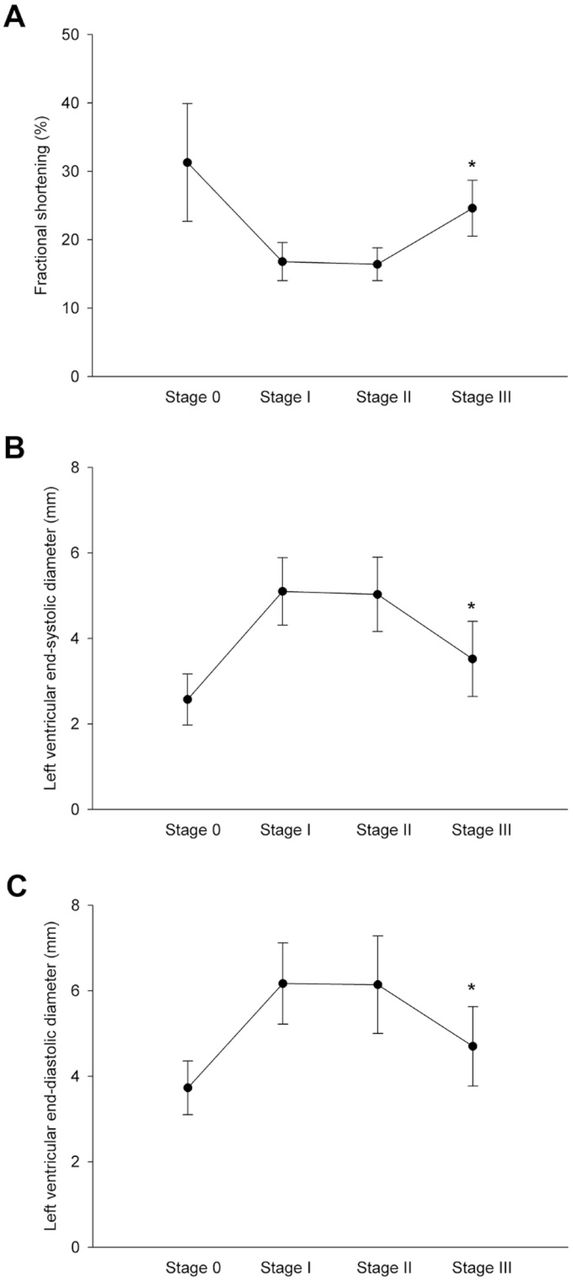 Echocardiographic parameters of infarcted treated rats measured before surgery and injection (Stage 0), before injection (Stage I), and two (Stage II) and five months (Stage III) after AAV9-shXPO1 injection.
Researchers examined the human jumping translocation breakpoint (hJTB) gene in breast cancer using custom plasmids from Creative Biogene. For JTB overexpression, a vector containing 6×His, HA, FLAG, and eGFP tags was constructed. Meanwhile, four shRNA plasmids targeting different hJTB sequences were designed using a psh-u6-egfp-Puro backbone for downregulation. Proteomic analysis of modified MCF7 cells showed that altered JTB expression influenced epithelial–mesenchymal transition, cytoskeletal organization, and metabolic pathways, indicating its role in promoting a more aggressive cancer phenotype.
 Figure 2. Plasmid constructs for the upregulation and downregulation of JTB were custom-designed by Creative Biogene. (Jayathirtha M, et al., 2022)
Custom vector design and construction represent not merely the initiation point of experimental workflows but constitute the foundational guarantee of scientific precision and experimental reproducibility. Creative Biogene combines technical excellence, stringent quality control, and flexible customization capabilities to deliver trusted vector solutions for global research and biopharmaceutical clients. Whether addressing routine construction needs or complex multi-gene system engineering challenges, our experience and technical proficiency ensure every vector serves your research objectives with precision, efficiency, and stability. Contact Creative Biogene today to discuss your custom vector requirements and accelerate your research breakthroughs.
Related Services
Cell Expression Vector Design and Construction
GMP Viral Vector Production Process
Plant Expression Vector Construction
Viral Vector Stability Testing
GMP Viral Vector Manufacturing
Reference:
Copyright © 2026 Creative Biogene. All rights reserved.