Plasmid Construction
Plasmid vector construction and host bacterium selection can have an impact on yield and quality, as well as on later production processes, including issues such as stability of plasmid passaging, different expression states in passaging stability, and the safety of the strain. Creative Biogene can provide many types of high-quality plasmid construction services. Based on our extensive experience in vector design and plasmid construction, we can provide optimized design services for any vector from scientific research to drug development applications to meet our clients' diverse plasmid production demands.
Vector Construction Strategy at Creative Biogene
Creative Biogene's vector construction strategy is divided into four main parts: selection of replication origin, selection of resistance genes, selection of regulatory sequences, and selection of target gene.
- Selection of replication origin
In order to increase the yield of plasmid DNA, we usually select high copy plasmids containing Col EI replication origin.
- Selection of resistance genes
When selecting resistance genes, we avoid the use of β-lactam antibiotics because a very small amount can cause strong allergic reactions in some populations.
- Selection of regulatory sequences
We construct plasmid DNA with due consideration of regulatory sequences such as promoter and termination signals that control efficient and stable expression of target genes in eukaryotic cells.
We can select target genes for plasmid construction and carefully screen promoters and terminators to strictly control their biological activity according to the client's project requirements.
Plasmid Construction Service Details
Design primers to amplify the target gene fragment from the cloning vector (or genome) according to the customer's production requirements. Select/process vectors and perform ligation of target genes to vectors to obtain target plasmids.
- Enzyme digestion identification
Linkage products are transformed into receptor cells, cloned and screened for positive bacteria (enzymatic digestion to detect positive clones).
Sequencing verification, alignment with gene sequences.
Optimize the design of existing plasmids to increase productivity based on the customer's production demands.
What We Deliver
| Deliverables | Turnaround Time | Price |
- About 5ug plasmid
- Glycerol bacterium containing recombinant plasmids
- Sequencing mapping
- COA documents
- Gene sequence alignment files
| 2-3 weeks | Inquiry |
Process of plasmid construction at Creative Biogene

Why Choose Us?
- Personalized and customized service. Our experienced technical team will design experiments according to your requirements.
- Strict quality control. Standard plasmid construction process (SOP) and standard QC system ensure high quality plasmids.
- Cost-effective. Creative Biogen offers you the most comprehensive service at the best price by resolving problems during the service process as quickly as possible.
Creative Biogene provides efficient vector construction services to our customers. All custom vectors are subject to strict quality control and testing. We ensure that the delivered vectors meet the customer's design requirements. Please feel free to contact us if you have a need, and our experienced specialists will be happy to assist you.
Case Study
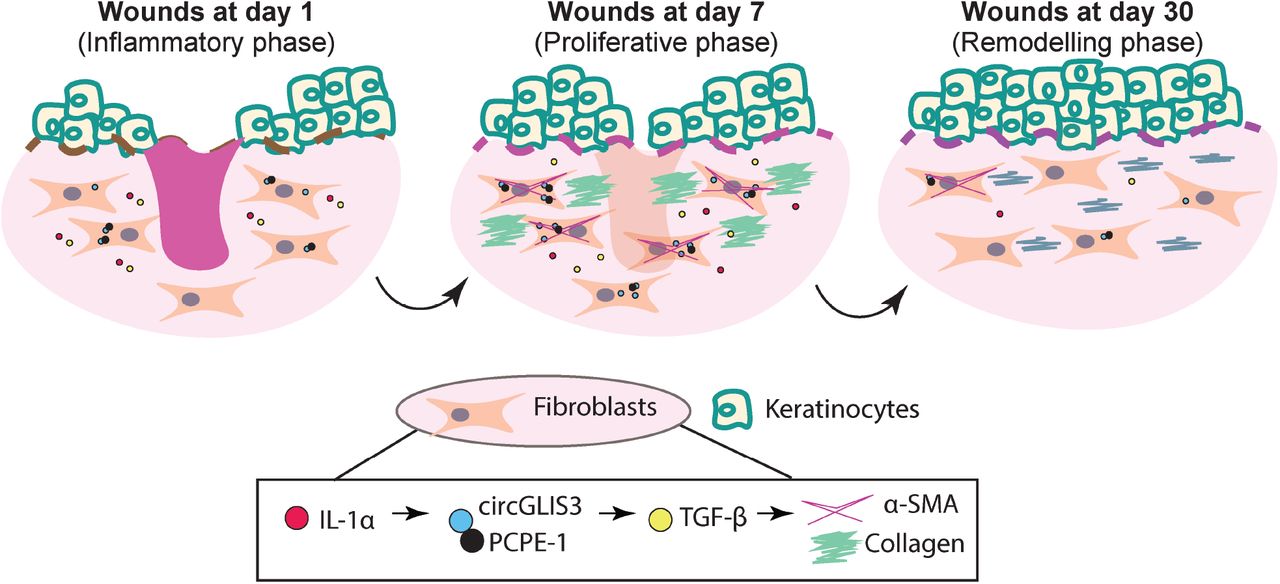 Summary of the study findings.
Paper
2022
Background
This study, through RNA sequencing, discovered that circGLIS3 is transiently upregulated in dermal fibroblasts after skin injury, partly driven by the IL-1 signal, and is highly expressed in keloids. circGLIS3 is mainly located in the cytoplasm and binds to the PCPE-1 protein to stabilize its expression, thereby enhancing the TGF-β signal, promoting fibroblast activation and extracellular matrix production. Knockdown of circGLIS3 reduces in vitro wound contraction and delays re-epithelialization, indicating that it is an important regulatory factor in skin wound healing.
Key Findings
1. RNA sequencing of human skin wound samples revealed that circGLIS3 is the only circRNA that is upregulated in wound tissues and dermal fibroblasts, but remains unchanged in wound keratinocytes; it is also upregulated in mouse wounds and overexpressed in human keloids. 2. circGLIS3 is formed by the second exon of GLIS3, is resistant to RNase R, has a longer half-life than linear RNA, and is mainly located in the cytoplasm; IL-1α can induce its expression, and its expression is positively correlated with IL1A expression. 3. Knockdown of circGLIS3 reduces TGF-β1-induced luciferase activity and the expression of ACTA2, FN1, COL1A1, and COL4A1, while overexpression enhances these responses, indicating that it enhances the TGF-β1 signal and fibroblast activation. 4. Mechanistically, circGLIS3 interacts with PCPE-1 protein and stabilizes its expression; the absence of PCPE-1 also weakens the TGF-β1 signal. 5. Knockdown of circGLIS3 in human in vitro wounds reduces re-epithelialization and wound contraction, reduces the expression of α-SMA and matrix genes, demonstrating that it promotes wound closure.
Contribution
In this study, Creative Biogene assisted in constructing the circGLIS3 overexpression plasmid and the plasmid with MS2 tag: circGLIS3 or circGLIS3-MS2 cDNA was cloned into the pLO-circRNA vector, digested with restriction endonucleases and ligated, and the sequences were verified. These plasmids were used in the circGLIS3 functional acquisition experiment and MS2 pull-down/mass spectrometry, helping to identify its interaction with PCPE-1.
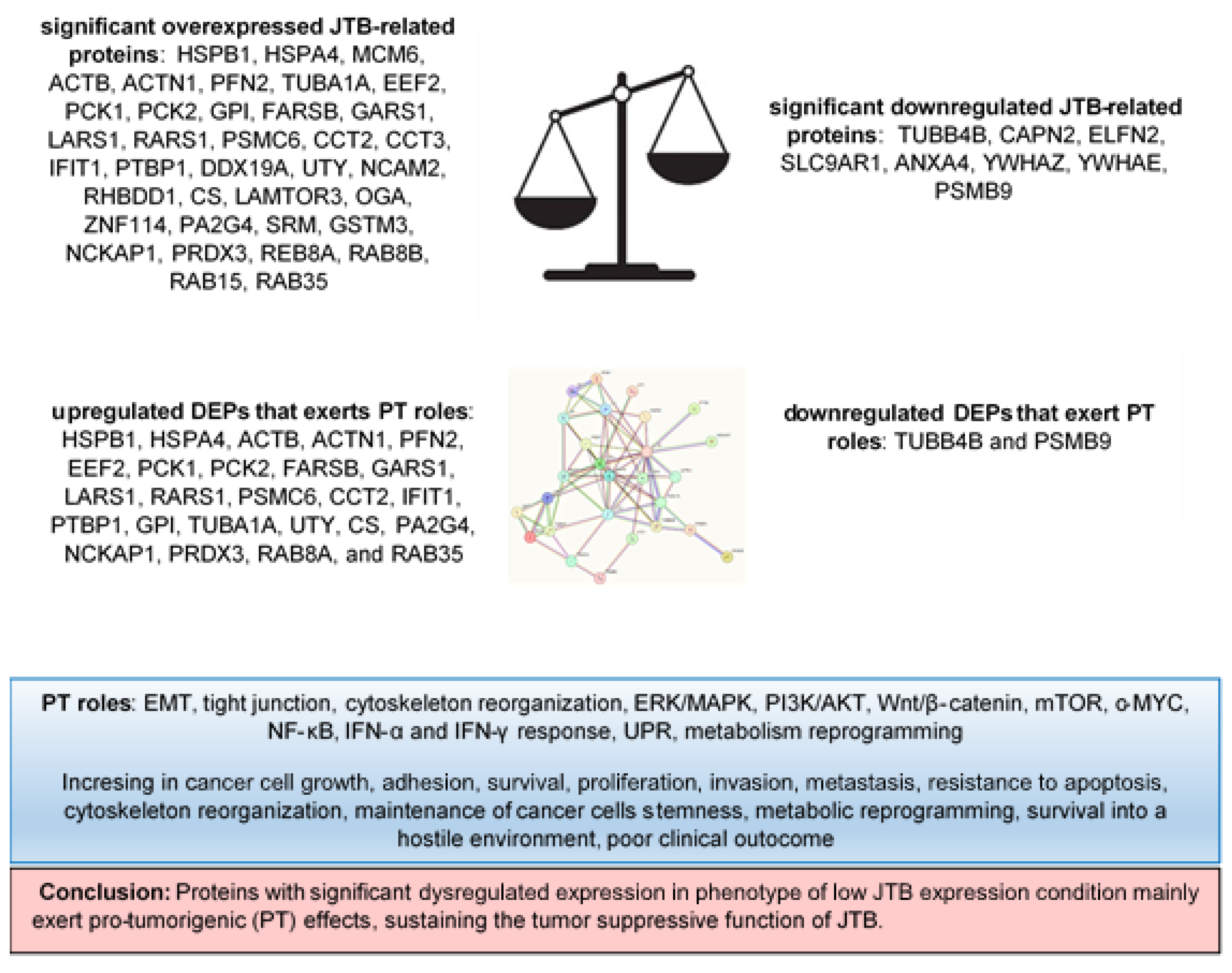 DEPs and their pro-tumorigenic (PT) activity in MCF7 BC cell line transfected for JTB silencing.
Paper
2023
Background
This study used 2D-PAGE coupled with nLC-MS/MS proteomics to identify differentially expressed proteins (DEPs) in MCF7 breast cancer cells after JTB silencing. JTB is proposed as a breast cancer biomarker and therapeutic target. The authors found 45 significantly dysregulated proteins, mostly pro-tumorigenic, and analyzed pathways via GSEA, KEGG, and STRING. JTB downregulation was linked to EMT, ERK/MAPK, PI3K/AKT, Wnt/β-catenin, mTOR, NF-κB, interferon responses, UPR, and glycolysis/gluconeogenesis, suggesting JTB silencing increases the neoplastic phenotype.
Key Findings
Using 2D-PAGE coupled with nLC-MS/MS, the study identified 45 significantly dysregulated proteins (37 upregulated, 8 downregulated) in MCF7 breast cancer cells transfected for JTB silencing. GSEA showed upregulated interferon-alpha, interferon-gamma, MYC targets V1, and unfolded protein response pathways, while estrogen response pathways were downregulated. KEGG/GO analyses linked DEPs to EMT, ERK/MAPK, PI3K/AKT, Wnt/β-catenin, mTOR, c-MYC, NF-κB, UPR, tight junction, cytoskeleton reorganization, and glycolysis/gluconeogenesis. STRING PPI network contained 27 nodes and 69 edges (enrichment p=6.44×10⁻¹²). Almost all DEPs exerted pro-tumorigenic effects under JTB-low conditions, supporting JTB’s tumor-suppressive function. Metabolic reprogramming involved PCK1, PCK2, and GPI. The authors conclude that JTB silencing may increase the neoplastic phenotype and behavior of MCF7 cells, suggesting JTB as a breast cancer biomarker and therapeutic target. Data are available via ProteomeXchange (PXD046265).
Contribution
Creative Biogene designed and synthesized four custom plasmids used for JTB knockdown in MCF7 cells: three hJTB-targeting shRNA plasmids and one scramble control, each with an eGFP tag and puromycin resistance. These reagents enabled the JTB silencing experiments central to the proteomic analysis.
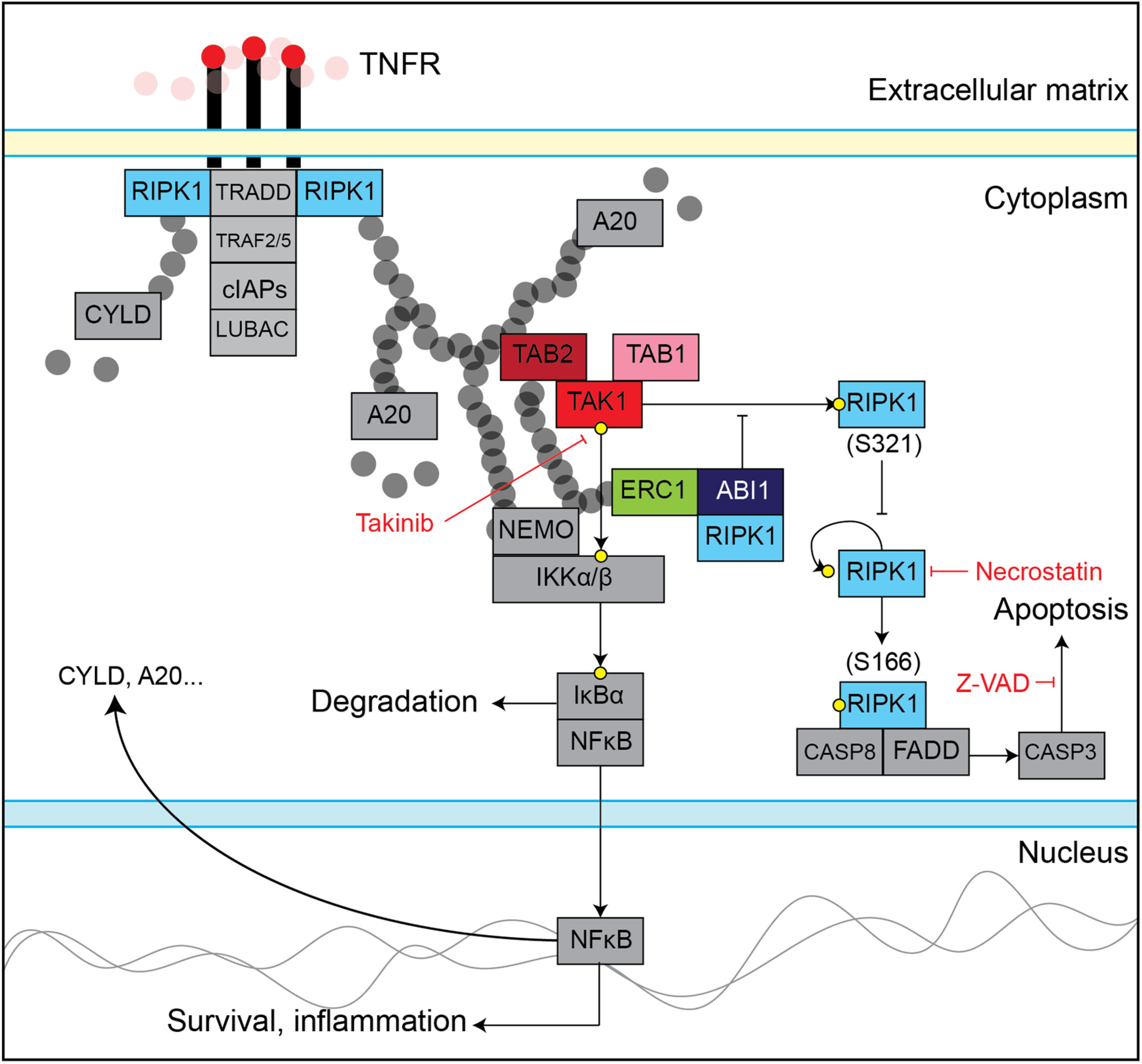 Diagram showing proposed Abelson interactor 1 (ABI1) role in tumor necrosis factor receptor (TNFR)-transforming growth factor β-activated kinase 1 (TAK1)-receptor-interacting serine/threonine-protein kinase 1 (RIPK1) signaling. Colored boxes represent proteins labeled as significant ABI1 proximal interactors
Paper
2023
Background
This study mapped the proximal interactome of the adaptor protein Abelson interactor 1 (ABI1) using TurboID-based proximity-dependent biotin labeling and mass spectrometry. A stringent filtering strategy combining peptide spectral matches and peak areas identified 212 ABI1 proximal interactors, including WAVE2 components and TAK1/NF-κB pathway proteins. Functional assays in ABI1-overexpressing and ABI1-knockout cells showed that ABI1 regulates TAK1/RIPK1 signaling, influencing TNFα-induced apoptosis and survival. The work reveals a previously unknown role for ABI1 in cell death and inflammatory signaling.
Key Findings
Using TurboID-ABI1 proximity labeling and label-free quantitative mass spectrometry, the authors identified 212 high-confidence ABI1 proximal interactors. Known WAVE2/cytoskeleton regulators were recovered, validating the approach. Unexpectedly, the dataset included TAK1, TAB2, RIPK1, and other TAK1/NF-κB signaling components. Coimmunoprecipitation confirmed direct ABI1 interactions with RIPK1, SQSTM1, and ERC1. In TNFα-stimulated ABI1-overexpressing and ABI1-knockout cells, ABI1 loss reduced RIPK1 S166 phosphorylation, increased RIPK1 S321 phosphorylation and NF-κB activation, and protected cells from TNFα-induced apoptosis; TAK1 inhibition reversed this protection. The findings support a model in which ABI1 regulates RIPK1 to modulate TAK1-dependent prosurvival versus death signaling.
Contribution
Creative Biogene synthesized the pcDNA3.1(+)-N-TurboID-13xGGGGS linker-ABI1 plasmid (ENSMUST00000153931.7) used by the authors. This custom construct provided the TurboID-ABI1 fusion template for cloning into MSCV-TurboID-Linker-ABI1-IRES-GFP, enabling stable cell generation and the proximity-labeling experiments that identified the ABI1 interactome.
* For research use only. Not intended for any clinical use.
 24x7 CUSTOMER SERVICE
 CONTACT US TO ORDER

