Transfected Stable Cell Lines
Reliable | High-Performance | Wide Rage
Precision reporter, kinase, immune receptor, biosimilar, Cas9, and knockout stable cell lines for diverse applications.


| Cat.No. | Product Name | Price |
|---|---|---|
| AD08814Z | Human KRAS adenoviral particles | Inquiry |
| LV00353Z | Human KRAS lentiviral particles | Inquiry |
| Cat.No. | Product Name | Price |
|---|---|---|
| SHH327107 | shRNA set against Rat KRAS (NM_031515.3) | Inquiry |
| SHL204570 | shRNA set against Human KRAS(NM_004985.3) | Inquiry |
| SHL204588 | shRNA set against Rat Kras(NM_031515.3) | Inquiry |
| SHW003526 | shRNA set against Chicken KRAS (NM_001256162) | Inquiry |
| SHH327099 | shRNA set against Human KRAS (NM_004985.3) | Inquiry |
| SHH327103 | shRNA set against Mouse KRAS (NM_021284.6) | Inquiry |
| SHL204510 | shRNA set against Human KRAS(NM_033360.2) | Inquiry |
| SHW006970 | shRNA set against Danio rerio KRAS (NM_001003744) | Inquiry |
| Cat.No. | Product Name | Price |
|---|---|---|
| CDCB160116 | Human KRAS ORF clone (BC013572) | Inquiry |
| CDCB168445 | Danio rerio KRAS ORF Clone (NM_001003744) | Inquiry |
| CDCL125329 | Human KRAS ORF clone (NM_033360.2) | Inquiry |
| CDCR379710 | Rat Kras ORF Clone(NM_031515.3) | Inquiry |
| CDCS412047 | Human KRAS ORF Clone (BC010502) | Inquiry |
| CDFG006807 | Human KRAS cDNA Clone(NM_033360.2) | Inquiry |
| CDFH010069 | Human KRAS cDNA Clone(NM_004985.3) | Inquiry |
| CDFR012677 | Rat Kras cDNA Clone(NM_031515.3) | Inquiry |
| MiUTR1H-05430 | KRAS miRNA 3'UTR clone | Inquiry |
| MiUTR1H-05431 | KRAS miRNA 3'UTR clone | Inquiry |
| MiUTR1R-02929 | KRAS miRNA 3'UTR clone | Inquiry |
| SKO0009 | KRAS Validated sgRNA vector | Inquiry |
| CDCB165001 | Chicken KRAS ORF Clone (NM_001256162) | Inquiry |
| CDCB189317 | Rabbit KRAS ORF clone (XM_008259518.1) | Inquiry |
| CDCR289343 | Human KRAS ORF Clone(NM_004985.3) | Inquiry |
| CDCS412046 | Human KRAS ORF Clone (BC013572) | Inquiry |
KRAS is the most common type of mutation in the RAS family. The Kras mutation will cause it to lose GTP hydrolase activity, thereby continuously activating downstream signaling pathways, causing cell proliferation to be uncontrolled and cancerous. At the same time, Kras mutation is a necessary condition for the growth and proliferation of tumor cells, and it is also one of the key reasons for tumor acquired resistance. KRAS is an important member of the RAS family and has a high mutation rate and has been receiving much attention. At present, most of the KRAS downstream effect pathways are RAF-MEK-ERK, PI3K-AKT and RalGDS-Ral.
KRAS Downstream Signaling Pathway
As one of the mitogen-activated protein kinase (MAPK) signaling pathways, the RAS-RAF-MEKERK signaling pathway is a key pathway in many signaling pathways that control cell growth, proliferation, differentiation and apoptosis. The cycle progression of different types of cells and apoptosis, signal molecule mutations in the pathway are often closely related to human cancer, and inhibitors developed for key molecules in the signaling pathway are also widely used in clinical cancer treatment. This pathway is activated by growth factors, mitogens, antigen receptors or GPCR (guanosine-binding protein coupled receptor), and transmits extracellular signals into the nucleus. When GTP replaces GDP binding to KRAS, KRAS is activated, and GTP-bound KRAS recruits RAF (rapidly accelerated fibrosarcoma) to the plasma membrane and activates RAF protein kinases, including CRAF, BRAF, and ARAF. The activated RAF will phosphorylate the serine/threonine residues of the bispecific kinases MEK1 and MEK2, which in turn leads to activation of MEK. The threonine and tyrosine residues of ERK can be further phosphorylated to activate them. Activated ERK can phosphorylate cytosolic signaling proteins, including p90 ribosomal S6 kinase (RSK) and MAPK-interacting serine/threonine kinase (MNK). It can also be transferred to the nucleus to directly activate cAMP response selment binding protein (CREB), c-Jun, c-Fos and other transcription factors to regulate cell growth, proliferation and differentiation.
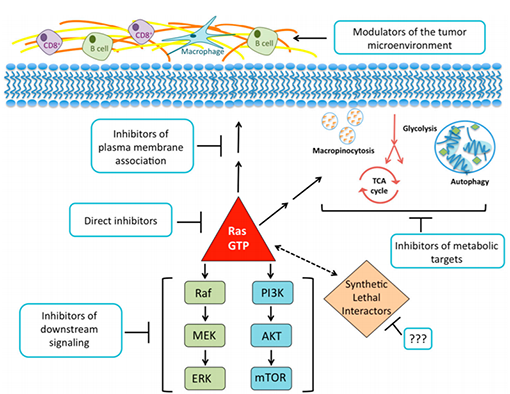 Figure 1. The current paths in the pursuit of an anti‐KRAS therapy. (Daniel, Z., et al. 2016)
Phosphatidylinositol-4, 5-bisphosphate 3-kinase (PI3K) is also a downstream effector of KRAS and can be activated by RAS to participate in the regulation of cell proliferation, differentiation, apoptosis and glucose transport.
Kras Mutation and Tumor Development
Activation mutations in the Kras gene are closely related to the development of human malignancies and tumor recurrence. Genetic and biochemical studies have demonstrated that KRAS-dependent signaling plays an important role in regulating the growth, proliferation, invasion and metastasis of a variety of cancer cells. The study found that in non-small cell lung cancer, the prevalence of Kras mutations in Caucasian patients is 20% to 30%. At the same time, studies have shown that Kras mutations are related to gender, age, etc. Kras mutations occur more frequently in women and younger patients. In a study of patients with colorectal cancer, Kras mutations were also more likely to occur in women and younger patients. At the same time, pathological studies have shown that Kras mutations are more common in patients with lung adenocarcinoma, especially invasive mucinous adenocarcinoma.
The smoking status is also related to the presence of the Kras mutation and the type of mutation. Studies have shown that using the allele-specific ligation method to detect Kras mutations in primary tumors, 92 (87%) of 106 patients with lung adenocarcinoma are smokers, so compared to non-smokers, Kras Mutations are more common in smoking patients. KRAS is also considered a marker in patient prognosis. In patients with non-small cell lung cancer, patients with Kras mutations have shorter survival than patients with Kras wild type, especially those with G12C point mutations. Other studies have shown that in colorectal cancer, mutations in the Kras codon 13 have an adverse effect on patient survival.
Kras Mutant Tumor Treatment Strategy
Studies have shown that targeting wild-type Kras by RNA interference (RNAi) can significantly inhibit tumor cell growth in lung cancer and colorectal cancer. Studies have also shown that exosomes secreted by normal fibroblast-like mesenchymal cells are engineered and packaged for delivery of siRNA or shRNA against the KrasG12D mutant. Compared to liposomes, engineered exosomes (iExosomes) is able to effectively target KrasG12D in vivo, providing a reliable method for direct targeted treatment of Kras mutant tumors.
In the strategy of treating Kras mutant tumors, co-inhibition of RAF-MEK-ERK and PI3KAKT-mTOR signaling pathways often achieve better clinical outcomes. In a clinical phase I trial, the PI3K inhibitor GDC-0941 was combined with the MEK inhibitor GDC-0973 to treat patients with non-small cell lung cancer with a Kras mutation and responded well.
References:
Copyright © 2026 Creative Biogene. All rights reserved.