Pages
Products
Products
CBpromise

Our promise to you:
Guaranteed product quality, expert customer support.

Promise 24Hour 24x7 CUSTOMER SERVICE
Promise Telphone CONTACT US TO ORDER

RNA Purification

Brief Introduction


RNA extraction from biological samples is complicated by the ubiquitous presence of ribonuclease enzymes in cells and tissues, which can rapidly degrade RNA. Purification of high-quality, intact RNA from biological samples or in vitro reactions is important to the success of all downstream applications such as reverse transcription real-time PCR (RT-qPCR), transcriptome analysis using next-generation sequencing, array analysis, digital PCR, northern analysis, and cDNA library construction. To generate the most sensitive and biologically relevant results, it is important to use the best RNA purification methods available.

Scientists at Creative Biogene have developed special products for the purification of high-quality, inhibitor-free RNA from essentially any sample source.

Creative Biogene's RNA Purification Kits provide the following advantages:
  • Isolate quality, intact nucleic acids
  • Easy to use
  • Save time

Case Study

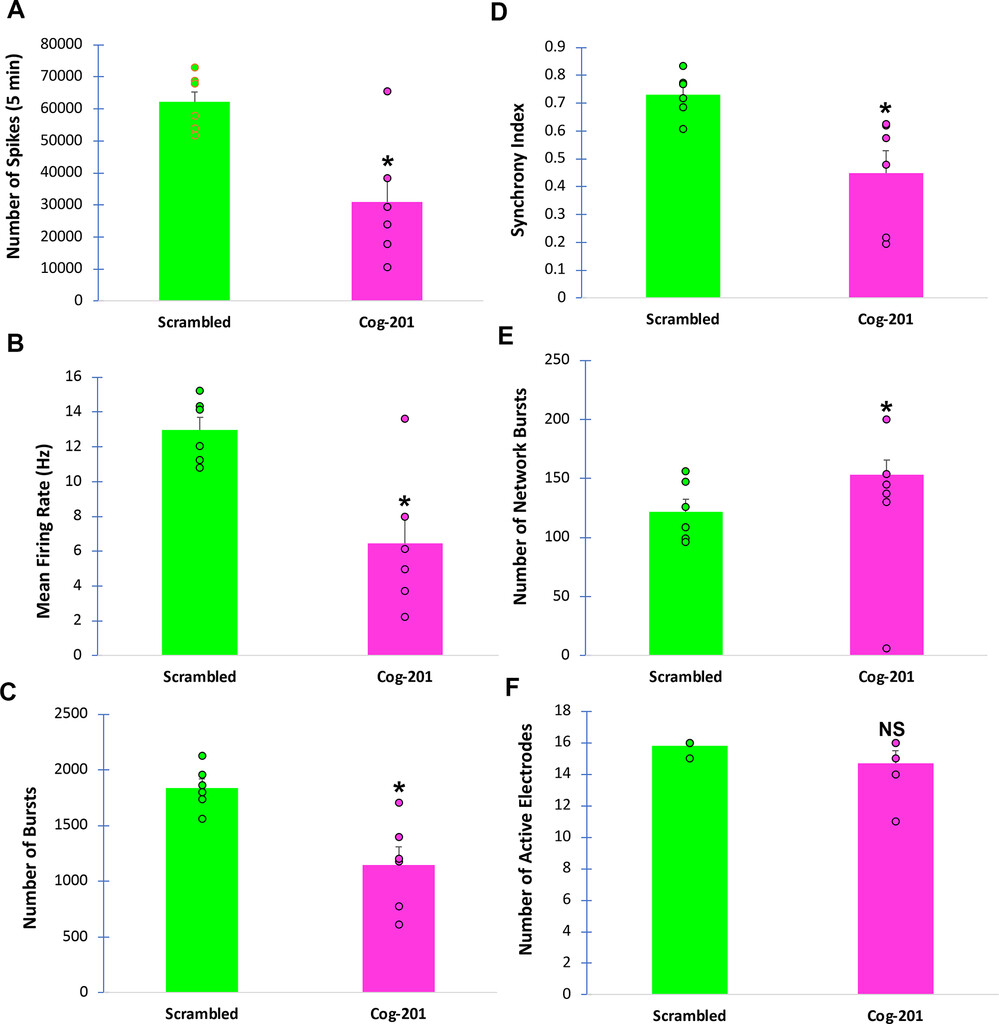
In vitro exposure of primary mouse cortical neurons with AAV9-mHTR2A-shRNA leads to a decrease in spontaneous electrical activity. In vitro exposure of primary mouse cortical neurons with AAV9-mHTR2A-shRNA leads to a decrease in spontaneous electrical activity.

Treatment with shRNA to knockdown the 5-HT2A receptor improves memory in vivo and decreases excitability in primary cortical neurons

Paper 2024
Genomic Psychiatry | DOI
Background
This study evaluates COG-201, an AAV9-delivered shRNA targeting the 5-HT2A receptor, for its memory-enhancing and neuronal-excitability-modulating effects. Intranasal COG-201 significantly improved recognition memory in rats, increasing the discrimination index by 22.5%. In primary mouse cortical neurons, COG-201 reduced HTR2A mRNA by 38% and receptor protein by 34%, and reduced spontaneous electrical activity including spike number, firing rate, bursts, and synchrony. These findings support COG-201 as a potential therapeutic for anxiety and cognitive disorders.
Key Findings
COG-201, an AAV9-shRNA targeting the 5-HT2A receptor, enhanced memory in rats as shown by a significant increase in the discrimination index in the novel object recognition test compared to vehicle controls. In primary mouse cortical neurons, COG-201 treatment led to a 38% decrease in HTR2A mRNA expression (p=0.0007) and a 34% decrease in 5-HT2A receptor protein levels (p=0.0002). Functional assays using multielectrode array revealed that COG-201 significantly reduced spontaneous electrical activity, including a 50% decrease in the number of spikes and mean firing rate (p=0.002 for each), a 27% decrease in the number of bursts (p=0.015), and a 38% decrease in the synchrony index (p=0.005). Interestingly, the number of network bursts increased by 20% (p=0.04), suggesting a compensatory mechanism that may enhance network synchronization. These in vitro results corroborate the in vivo memory improvements and underscore the potential of COG-201 as a targeted therapeutic strategy for conditions such as anxiety and cognitive impairment.
Contribution
Creative Biogene contributed to this study by performing RNA extraction and real-time quantitative PCR analysis, which were essential for confirming the significant knockdown of HTR2A mRNA in primary cortical neurons treated with COG-201.
* For research use only. Not intended for any clinical use.
Quick Inquiry
