

Nuclear factor κB (NF-κB) plays an important role in the occurrence of various human diseases. Various inflammatory signals, including circulating lipopolysaccharides (LPSs), can activate the expression of NF-κB through special receptors. Recently, in a research report titled "Positive selection CRISPR screens reveal a druggable pocket in an oligosaccharyltransferase required for inflammatory signaling to NF-κB" published in the international journal Cell, scientists from Dana-Farber Cancer Institute and other institutions are expected to help develop new targeted therapies to inhibit the activation of NF-κB.
Researchers said that NF-κB is a transcription factor that plays an important role in various autoimmune diseases, inflammatory diseases and cancers in humans. In this study, researchers tracked the activation mechanism of NF-κB and identified a key susceptibility site. NF-κB can be activated by circulating lipopolysaccharide that binds to the cell surface receptor TLR4. After conducting studies using CRISPR/Cas9, researchers found that this LPS receptor TLR4 depends on OST-A to function properly. OST-A is an oligosaccharide transferase complex, and the OST complex can be inhibited by a compound called NGI-1. However, researchers are currently unclear about the molecular mechanism behind its effect.
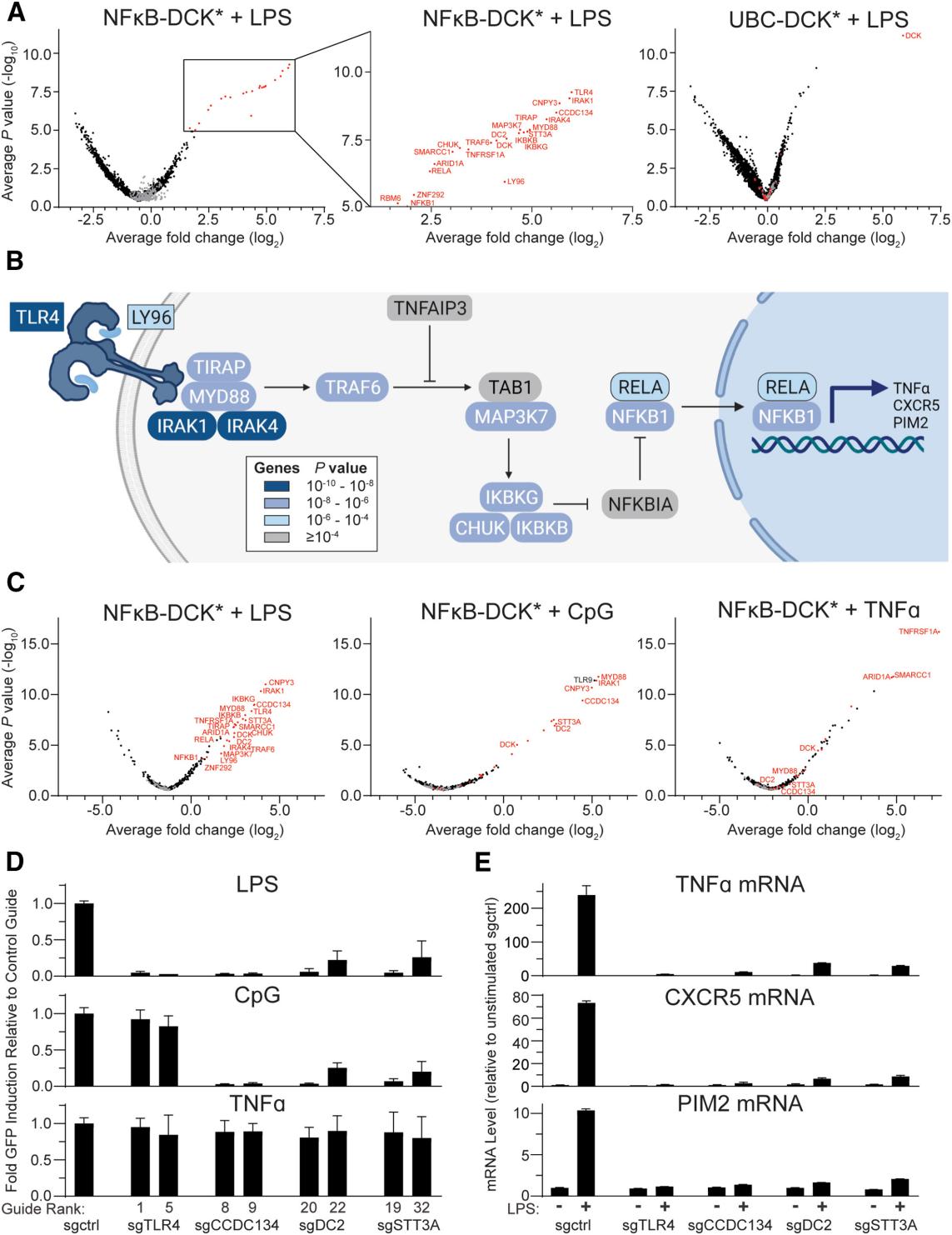
Figure 1. Identification of genes required for NF-κB pathway activity in response to various stimuli. (Lampson, Benjamin L., et al. 2024)
After conducting CRISPR screening and studying using cryo-electron microscopy, the researchers found that NGI-1 can bind to OST-A on the catalytic subunit STT3A of the complex. There, NGI-1 drives the complex into an inactive state and prevents TLR4 from reaching the cell surface, thus preventing NF-κB activation. The development of agents that inhibit STT3A may represent a new potential strategy to block NF-κB activation in response to LPS. NF-κB is often involved in a range of human diseases including autoimmune diseases, inflammatory diseases and cancer. This may indicate that this method has broad practicality.
| Cat.No. | Product Name | Price |
|---|---|---|
| CLKO-0583 | STT3A KO Cell Lysate-HEK293T | Inquiry |
| MiUTR1M-11354 | STT3A miRNA 3'UTR clone | Inquiry |
| MiUTR3H-03900 | STT3A miRNA 3'UTR clone | Inquiry |
| SKO0974 | STT3A Validated sgRNA vector | Inquiry |
| AD15708Z | Human STT3A adenoviral particles | Inquiry |
| CDCB166335 | Chicken STT3A ORF Clone (NM_204345) | Inquiry |
| CDCR245438 | Mouse Stt3a ORF Clone(NM_008408.4) | Inquiry |
| CDCR377000 | Rat Stt3a ORF Clone(NM_001134749.1) | Inquiry |
| CDFR009989 | Rat Stt3a cDNA Clone(NM_001134749.1) | Inquiry |
| CSC-DC015349 | Panoply™ Human STT3A Knockdown Stable Cell Line | Inquiry |
| CSC-RT1093 | Human STT3A Knockout Cell Line-HEK293T | Inquiry |
In summary, the results of this article provide basic principles and preliminary steps for the development of STT3A-specific inhibitors. The potential of simultaneous base-based editor and structural studies in defining drug mechanisms of action is also elucidated.
Reference
Lampson, Benjamin L., et al. "Positive selection CRISPR screens reveal a druggable pocket in an oligosaccharyltransferase required for inflammatory signaling to NF-κB." Cell 187.9 (2024): 2209-2223.