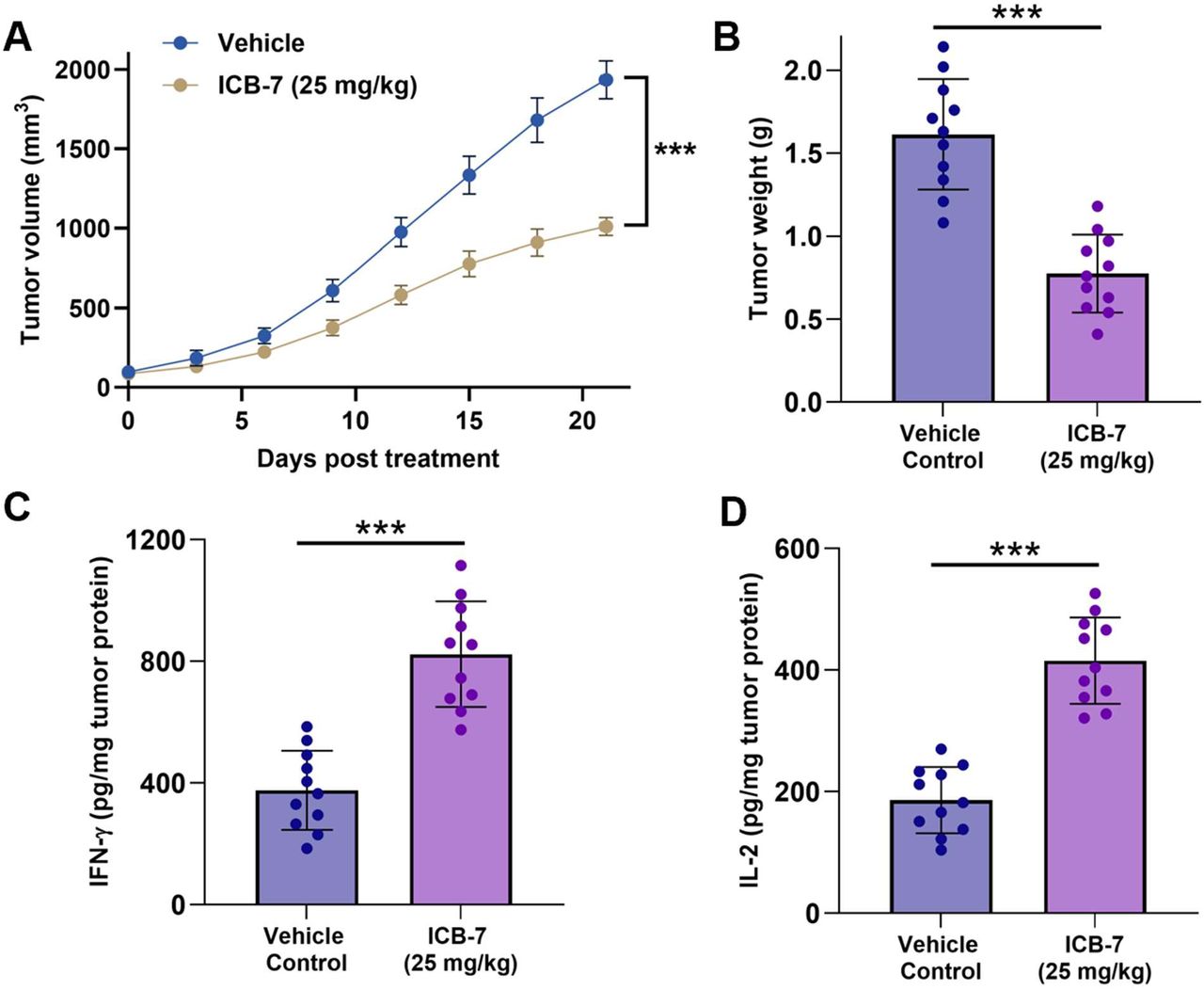
 ICB-7 suppresses CT26 tumor growth and promotes anti-tumor immune activation in vivo.
Targeting the Myeloid Immune Checkpoint ILT3 (LILRB4) with Small Molecules Enables Reprogramming of Suppressive Tumor Immunity
Paper
2026
bioRxiv |
DOI
Background
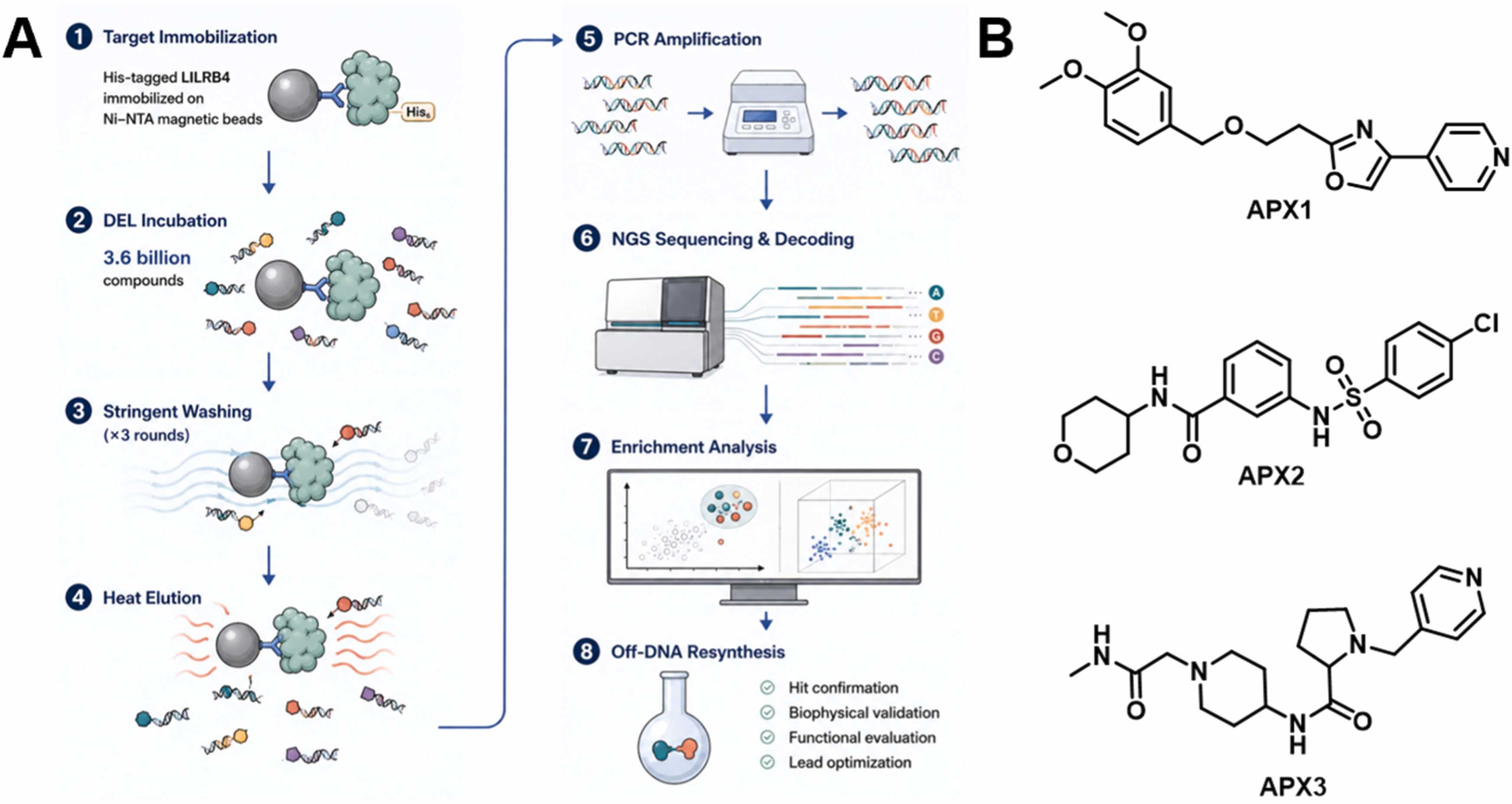
Cancer immunotherapy is limited by suppressive myeloid cells. This preprint reports discovery of small-molecule ILT3/LILRB4 modulators using Dianthus-based TRIC screening of 8,961 Enamine compounds. Lead ICB-7 binds ILT3 with high affinity, engages cellular ILT3, disrupts ILT3-SCG2 interaction, and inhibits SHP1/SHP2/STAT3 signaling. In patient-derived colorectal cancer and AML co-cultures, ICB-7 restores cytotoxic T-cell activity and reduces tumor viability. It shows favorable pharmacokinetics and oral anti-tumor efficacy in the CT26 syngeneic model, establishing ILT3 as a tractable small-molecule immunotherapy target.
Key Findings
Using a Dianthus-based temperature-related intensity change (TRIC) screen of 8,961 Enamine compounds, the authors identified direct small-molecule binders of the myeloid checkpoint ILT3/LILRB4. Lead compound ICB-7 bound recombinant human ILT3 with a KD of 156 nM and engaged endogenous ILT3 in cells with a CETSA EC50 of 289 nM. Molecular docking and molecular dynamics simulations revealed a stable hydrophobic binding pocket in the D2 domain of ILT3, with MM/GBSA binding free energy of -33.4 kcal/mol for ICB-7. Functionally, ICB-7 disrupted the ILT3-SCG2 interaction (IC50 694 nM) and inhibited downstream phosphorylation of SHP1, SHP2, and STAT3. In patient-derived colorectal cancer and acute myeloid leukemia co-culture models, ICB-7 enhanced cytotoxic T-cell activity, restored IFN-γ and IL-2 secretion, and reduced tumor-cell viability. ICB-7 showed favorable pharmacokinetics, ~48% oral bioavailability, and significant anti-tumor efficacy in the CT26 syngeneic colorectal carcinoma model, with increased intratumoral IFN-γ and IL-2. These findings establish ILT3 as a tractable target for small-molecule immunomodulation.
Contribution
Creative Biogene provided the CHO cell line stably expressing human ILT3/LILRB4 (Cat# CSC-RO0667) used in the cellular thermal shift assay (CETSA). This reagent enabled confirmation of dose-dependent cellular target engagement by ICB-7 and ICB-9, supporting the article's biophysical validation of direct ILT3 binding.