

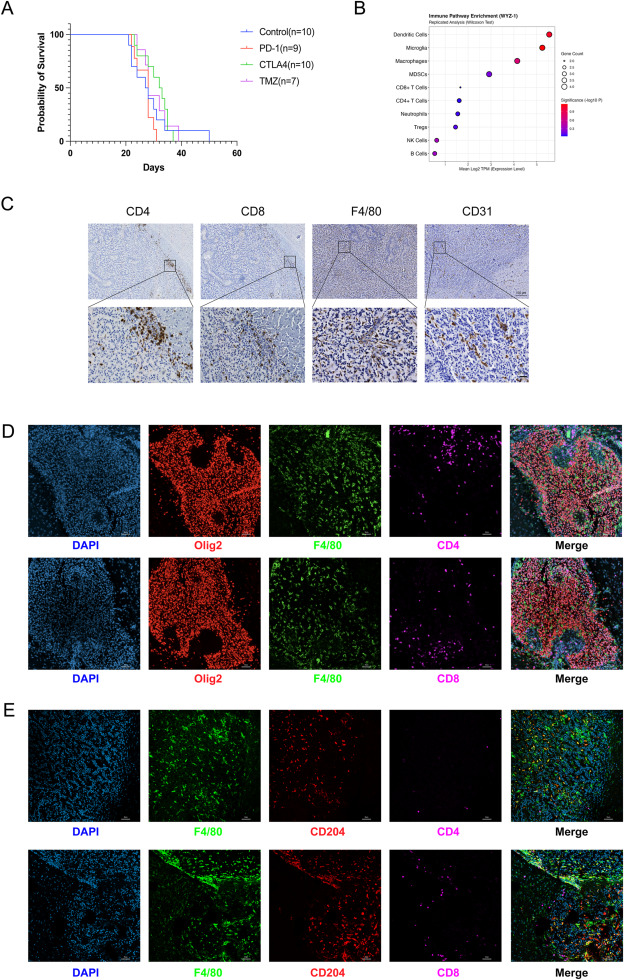
 Kaplan-Meier survival analysis of WYZ-1 tumor-bearing mice under different treatments.
The WYZ-1 mouse glioblastoma stem cell model: A novel preclinical tool for tumor and therapy studies
Paper
2026
Cancer Letters |
DOI
Background
This study establishes a novel syngeneic glioblastoma stem cell line derived from a PDGFB-driven RCAS/tv-a mouse tumor and generates a PTEN-deficient derivative, WYZ-1. WYZ-1 cells show robust self-renewal, high expression of GSC markers (CD133, Nestin, SOX2), and multilineage differentiation. Intracranial implantation into immunocompetent mice produces aggressive, infiltrative, and vascularized tumors that recapitulate key human glioblastoma histopathology. These tumors display an immune-excluded, cold tumor microenvironment and are resistant to temozolomide and anti-PD-1, with only modest survival benefit from CTLA-4 blockade, providing a valuable preclinical platform for studying glioblastoma biology and immunotherapy.
Key Findings
Key findings include: (1) successful establishment of RTG01 and PTEN-deficient WYZ-1 lines with confirmed genetic modifications; (2) WYZ-1 cells exhibit high expression of CD133, Nestin, and SOX2, robust neurosphere formation, and multipotent differentiation into neuronal and astrocytic lineages; (3) in vivo tumors grow progressively, showing high proliferation, diffuse infiltration, necrosis, and vascularization; (4) immunohistochemistry reveals stem-like and proneural-associated markers with partial mesenchymal plasticity; (5) tumors present an immune-excluded microenvironment dominated by CD204-positive M2 macrophages/microglia, while sparse T cells are restricted to tumor margins and display terminal exhaustion with high PD-1 and LAG-3; (6) WYZ-1 tumors are resistant to temozolomide and anti-PD-1, whereas anti-CTLA-4 provides a modest survival benefit. This model faithfully mirrors the therapeutic resistance of human glioblastoma and offers a robust platform for evaluating novel immunotherapies.
Contribution
Creative Biogene supplied the Cre-expressing lentivirus used to delete Pten in RTG01 cells, enabling the generation of the PTEN-deficient WYZ-1 cell line.