


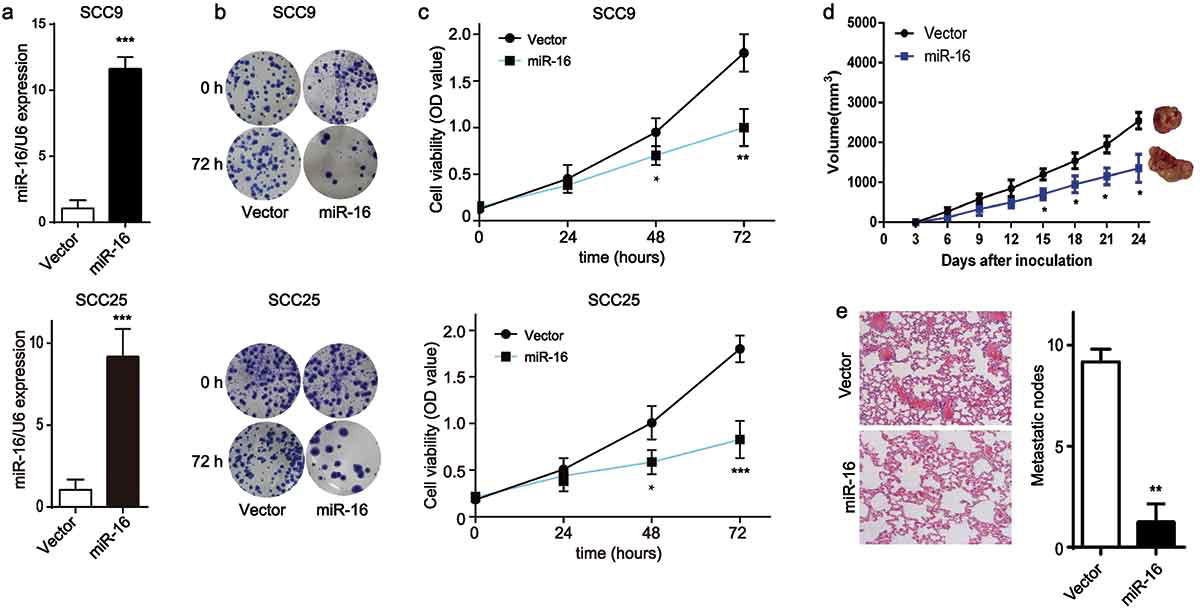
 Forced expression of miR-16 suppresses OSCC progression in vitro and in vivo.
Loss of miR-16 contributes to tumor progression by activation of tousled-like kinase 1 in oral squamous cell carcinoma
Paper
2018
Cell Cycle |
DOI
Background
This study investigates the role of miR-16 in oral squamous cell carcinoma (OSCC). In 131 OSCC tissues, miR-16 was downregulated and associated with metastasis and poor prognosis. TLK1 was overexpressed and negatively correlated with miR-16. Bioinformatics and luciferase assays confirmed TLK1 as a direct miR-16 target. miR-16 overexpression suppressed OSCC cell proliferation and xenograft tumor growth/lung metastasis, while TLK1 restoration reversed miR-16-induced DNA damage and G2/M arrest. The findings identify the miR-16/TLK1 axis as a potential prognostic biomarker and therapeutic target in OSCC.
Key Findings
miR-16 expression was significantly lower in OSCC tissues than adjacent normal tissues (n=131) and in OSCC cell lines, with lower levels associated with lymph node metastasis, higher TNM stage, and shorter overall survival in both institutional and TCGA cohorts. TLK1 was markedly upregulated in OSCC tissues/cells, negatively correlated with miR-16, and predicted poor survival. Luciferase reporter and mutation assays demonstrated that miR-16 directly targets the 3′-UTR of TLK1 mRNA, reducing TLK1 mRNA and protein. Forced miR-16 expression inhibited SCC9/SCC25 proliferation, colony formation, xenograft tumor growth, and lung metastasis. Mechanistically, miR-16-mediated TLK1 downregulation increased γ-H2AX foci, CHK1, and G2/M arrest, while TLK1 overexpression reversed DNA damage and cell cycle arrest and restored Cyclin B1. These results establish miR-16 as a tumor suppressor in OSCC and support the miR-16/TLK1 axis as a prognostic biomarker and therapeutic target.
Contribution
Creative Biogene provided the miRNA First-Strand Synthesis kit used for reverse transcription of miR-16 prior to qRT-PCR. This kit enabled reliable quantification of miR-16 expression in 131 OSCC tissues and cell lines, supporting the study's key findings on miR-16 downregulation and its prognostic significance.