


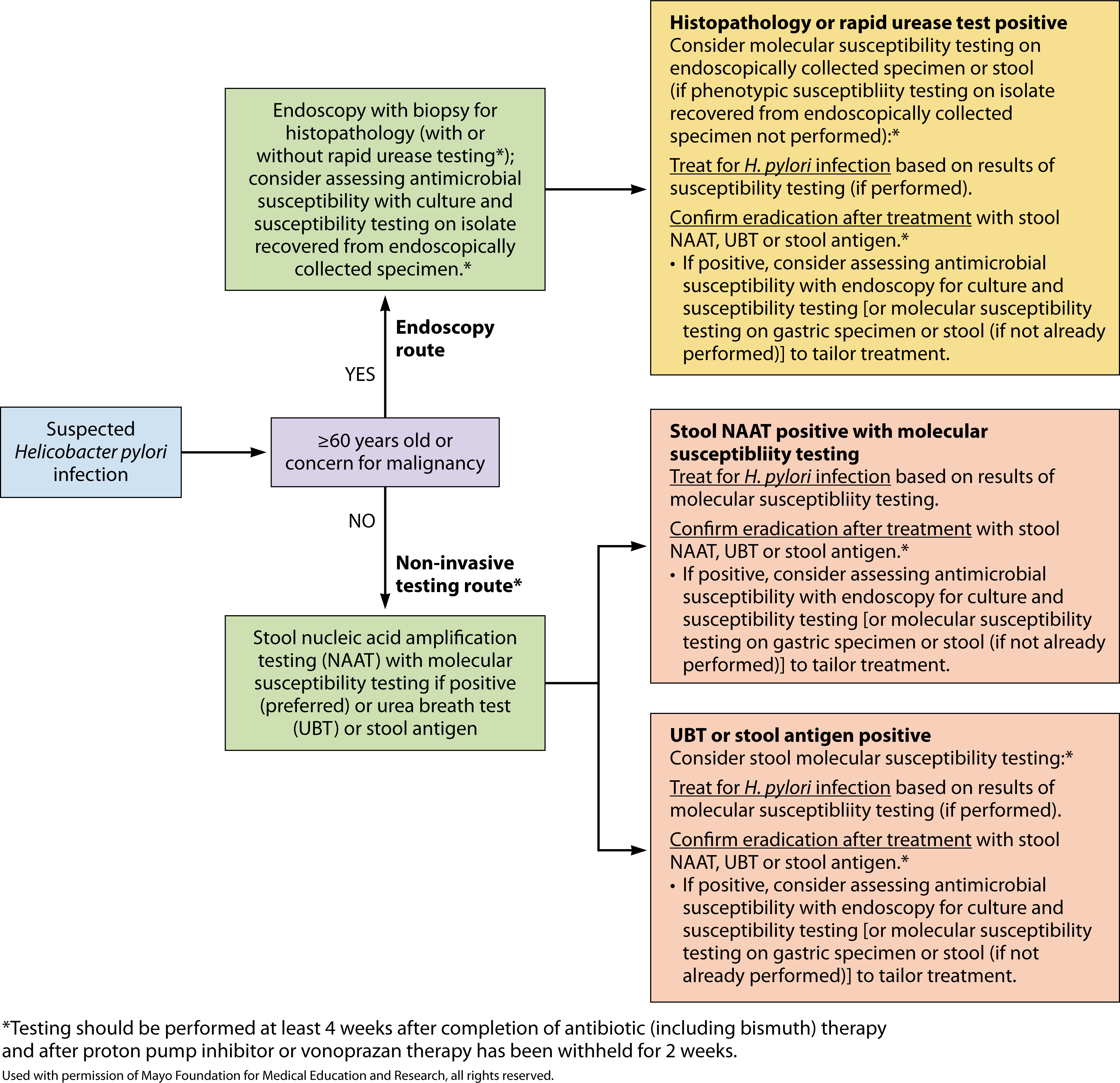
 Diagnostic algorithm for Helicobacter pylori.
Testing for Helicobacter pylori in an era of antimicrobial resistance
Paper
2024
Journal of Clinical Microbiology |
DOI
Background
This minireview examines the challenges posed by antimicrobial resistance in Helicobacter pylori, which is undermining traditional empiric therapy. It highlights the importance of antimicrobial susceptibility testing to guide treatment and provides an overview of available diagnostic methods, including non-invasive tests like stool antigen, urea breath test, and stool PCR, as well as endoscopic techniques. The article emphasizes the utility of molecular tests for detecting resistance mutations, particularly for clarithromycin and levofloxacin, to enable personalized therapeutic decisions and confirm eradication.
Key Findings
The article reports that clarithromycin resistance in H. pylori can exceed 70% in clinical isolates, rendering traditional empiric triple therapy ineffective. Susceptibility-guided treatment improves eradication rates to 85% versus 75% with empiric therapy. Molecular tests on stool and gastric specimens can rapidly detect resistance-associated mutations, particularly in the 23S rRNA gene for clarithromycin and gyrA for levofloxacin, with high sensitivity and specificity. These tests enable personalized treatment without the need for culture, although phenotypic susceptibility testing remains essential for amoxicillin, tetracycline, and rifabutin. Metronidazole resistance genotyping is complicated due to complex mechanisms. The authors advocate for integrating diagnostic testing into clinical practice and call for FDA-cleared assays to support susceptibility-guided therapy.
Contribution
Creative Biogene is credited for offering the Helicobacter pylori Real Time PCR Kit, a commercially available molecular test referenced in the article for detection and resistance prediction.